Story of Gold Hill
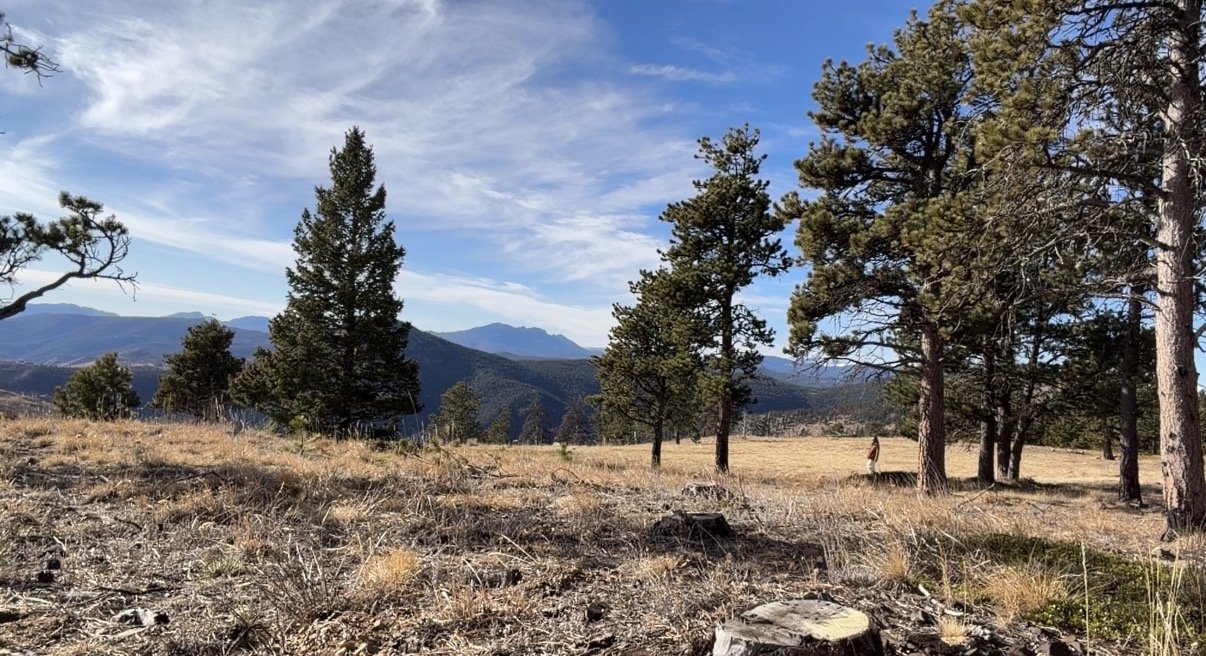
This is a part of the Roosevelt National Forest, sitting over 8,000 ft. Where days are short, sun is minimal, and temperatures are often below freezing. These steep mountains and rocky peaks encounter lots of snow and wind. It's a time of restoration, when nature rests in preparation for next year.
On a morning after a dusting of snow, the land lies frozen and critters still. The only sound is a soft whisper, with the sun low in the sky. Dense lodgepole pines anchor the ground. With their thick roots, they reach up to 100 feet, acting as important cover for large wildlife like elk and bear.
We, too, used them for shelter, once upon a time. Pines were seen as protection, their wood used to build teepees and their bark mashed to relieve aches and pains. Today, high winds blow tips from the trees.
The snow makes them visible, their kelly green popping against the dusting of white. As I collect them, I’m pulled to their neighboring tribe.
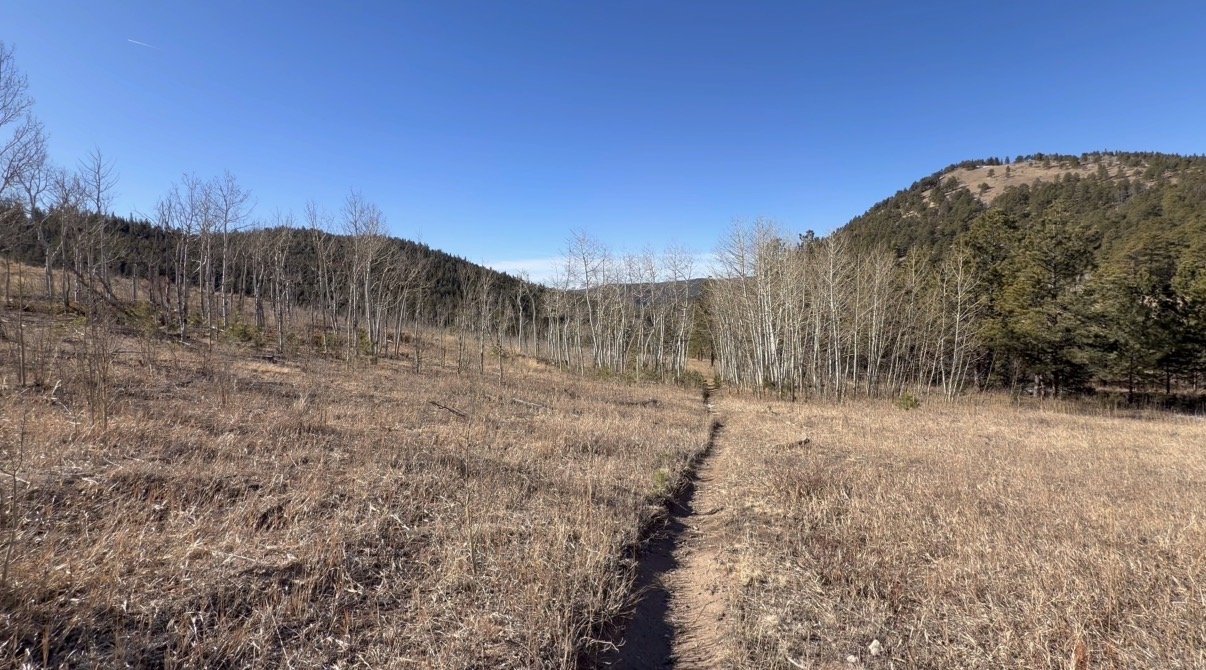
A grove of aspen, who create a thinner canopy for a rich number of species to thrive. They, too, have dense root systems that stabilize the land. We used their wood for shelters and their white powdery bark to guard against the sun.
Together, pines and aspen create a nice balance of sun and shade, increasing diversity and resiliency to pests and disease. As I lay the pine tips in the aspen, the wind teaches how to embrace imperfection. One after the other, the tips fall as I try to force them into place. Only until I lay them gently and let the sturdy branches shelter the wind, each one holds the other with grace. Together, these trees shelter this forest. Side by side, they paint this beautiful scene, protecting the unseen.
